
Mäkelä Alu participated in the UN Climate Change Conference COP31, held in Antalya, Türkiye, in November, as part of the programme at the Finland Pavilion. The climate conference reinforced our belief that low-carbon solutions and the circular economy will offer significant business opportunities in the coming years.
Mäkelä Alu hosted its own panel discussion at the Finland Pavilion, entitled Voluntary Action for the Planet – Mäkelä Alu’s Low-Carbon Journey and What Enables Change, where we presented, among other things, our voluntary emission reduction measures. We also discussed the low-carbon future of industry and the factors that enable change.
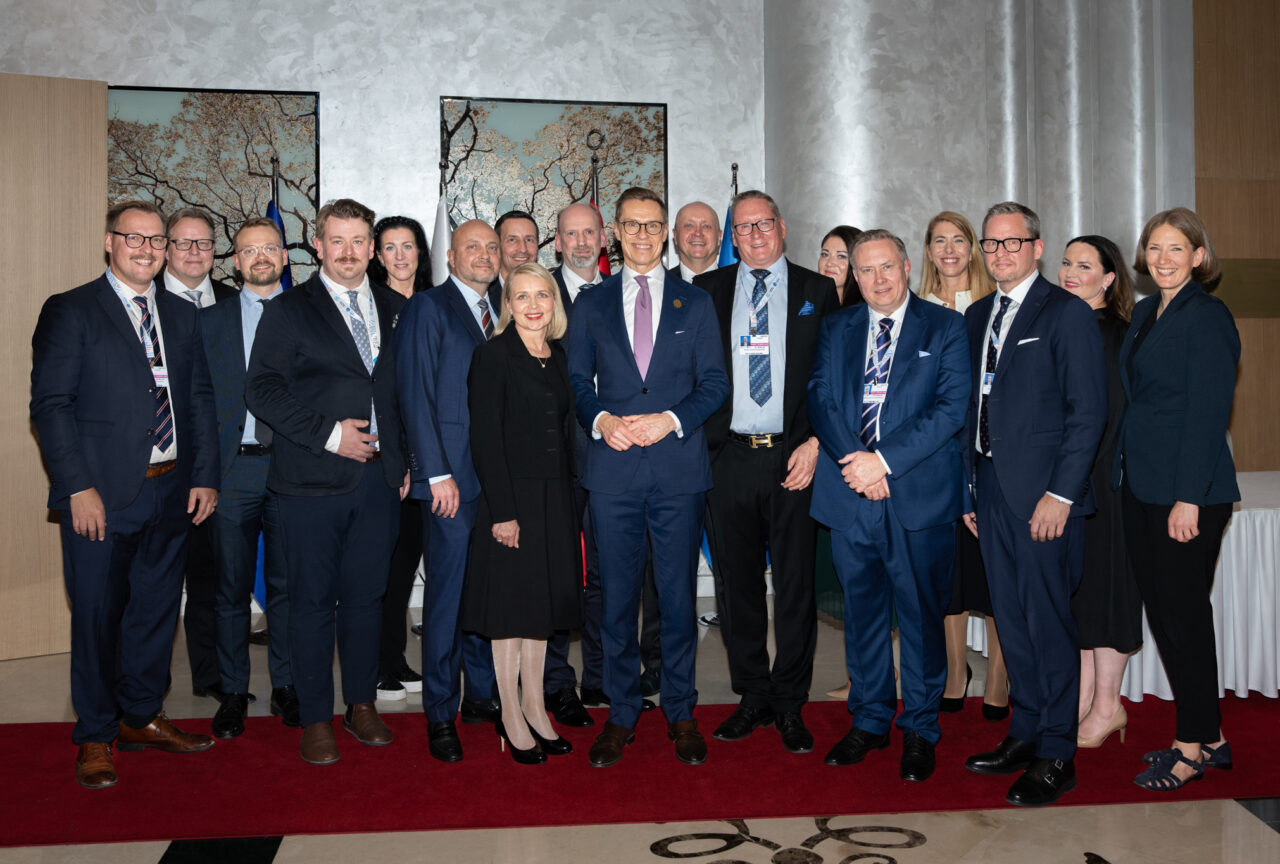
Finnish climate expertise also gained visibility at the conference through a speech by the President of Finland, Alexander Stubb, who highlighted Mäkelä Alu as an example of the work being carried out by Finnish companies.
So why does a company the size of Mäkelä Alu participate in the world’s largest climate event?
“There are essentially two reasons. The first is to learn and gain a better understanding of where the world is heading. The second, and perhaps even more important from a business perspective, is that we believe low-carbon solutions and the circular economy will offer us significant opportunities in the coming years. We want to make use of these opportunities for the benefit of our customers and to ensure their success,” says Marko Orpana, CEO of Mäkelä Alu.
Corporate action and technological development give reason for optimism
During the climate conference, Orpana heard a wide range of perspectives on tackling climate change and how different countries and companies approach the issue. Many technological solutions already exist, but implementing them requires both willingness and the right economic conditions.
“My confidence in the ability of international climate policy to address these challenges certainly did not grow. On the other hand, corporate action and technological development give considerably more reason for optimism. My feeling is that, in many respects, practical solutions will progress faster than international decision-making,” Orpana reflects.
In recent years, Mäkelä Alu has invested significantly in the electrification of production, energy efficiency and reducing its carbon footprint. In 2025, we achieved net zero emissions in our own production and internal logistics.
In addition to their environmental impact, these investments also have economic significance. Energy efficiency, better utilisation of materials and production efficiency all have a direct impact on the company’s competitiveness.
“At the same time, it is important to remember that being low-carbon is not enough on its own to ensure competitiveness. Customers still need to receive a high-quality product, on time and at a competitive price. We must therefore be able to improve sustainability and productivity simultaneously. In fact, I believe these two aspects support each other in many ways,” Orpana adds.
The climate conference reaffirmed our chosen direction
Orpana came away from the climate conference with mixed feelings. The world’s ability to make collective decisions is a cause for concern, while the progress being made by companies gives confidence in the future. It was also encouraging to see that Finnish expertise has much to offer internationally and that Mäkelä Alu’s work is attracting interest.
“The trip reinforced my belief that we should continue along our chosen path. Not because international climate conferences or legislation require us to do so, but above all because we believe it is the right decision for the future of Mäkelä Alu,” says Orpana.
“We need to manufacture our products even more efficiently, make the best possible use of our raw materials and respond to the changing needs of our customers. If we succeed in this, I believe we will be doing the right thing for both the environment and our own business,” Orpana concludes.
In addition to CEO Marko Orpana, Mäkelä Alu was represented at the COP31 climate conference by Chairman of the Board Petri Mäkelä, Sustainability Director Päivi Venesoja and Development Director Tomi Pilbacka.
Article photo: Pyry Pietiläinen